Before the First Prompt
AI changes how we produce code, but reliable software still begins with source control, automated testing, environment discipline, and CI/CD.
Read article →
Fractional Insight CIO helps growing organizations align technology strategy, knowledge architecture, private AI, governance, vendors, security, and infrastructure into practical business capability.
Schedule a ConversationPractical technology leadership for organizations that need structure, security, and direction without unnecessary complexity.
Design the knowledge structures, metadata, retrieval boundaries, governance, and decision flows that make enterprise AI useful, trustworthy, and secure.
Control where AI runs, what knowledge it can access, what may leave the organization, and when private or frontier models are appropriate.
Ongoing executive technology leadership for strategy, governance, vendors, architecture, investment priorities, and practical AI adoption.
Keep institutional knowledge current, governed, documented, and usable through ownership, lifecycle management, runbooks, and AI-supported workflows.
Practical guidance on technology leadership, infrastructure, security, governance, and the operating decisions behind durable systems.
AI changes how we produce code, but reliable software still begins with source control, automated testing, environment discipline, and CI/CD.
Read article →Decades of software engineering practice provide the architecture, shared logic, and persistent project instructions needed to guide AI coding agents.
Read article →Translate business requirements into bounded, testable Work Orders that let AI agents implement software within an established engineering framework.
Read article →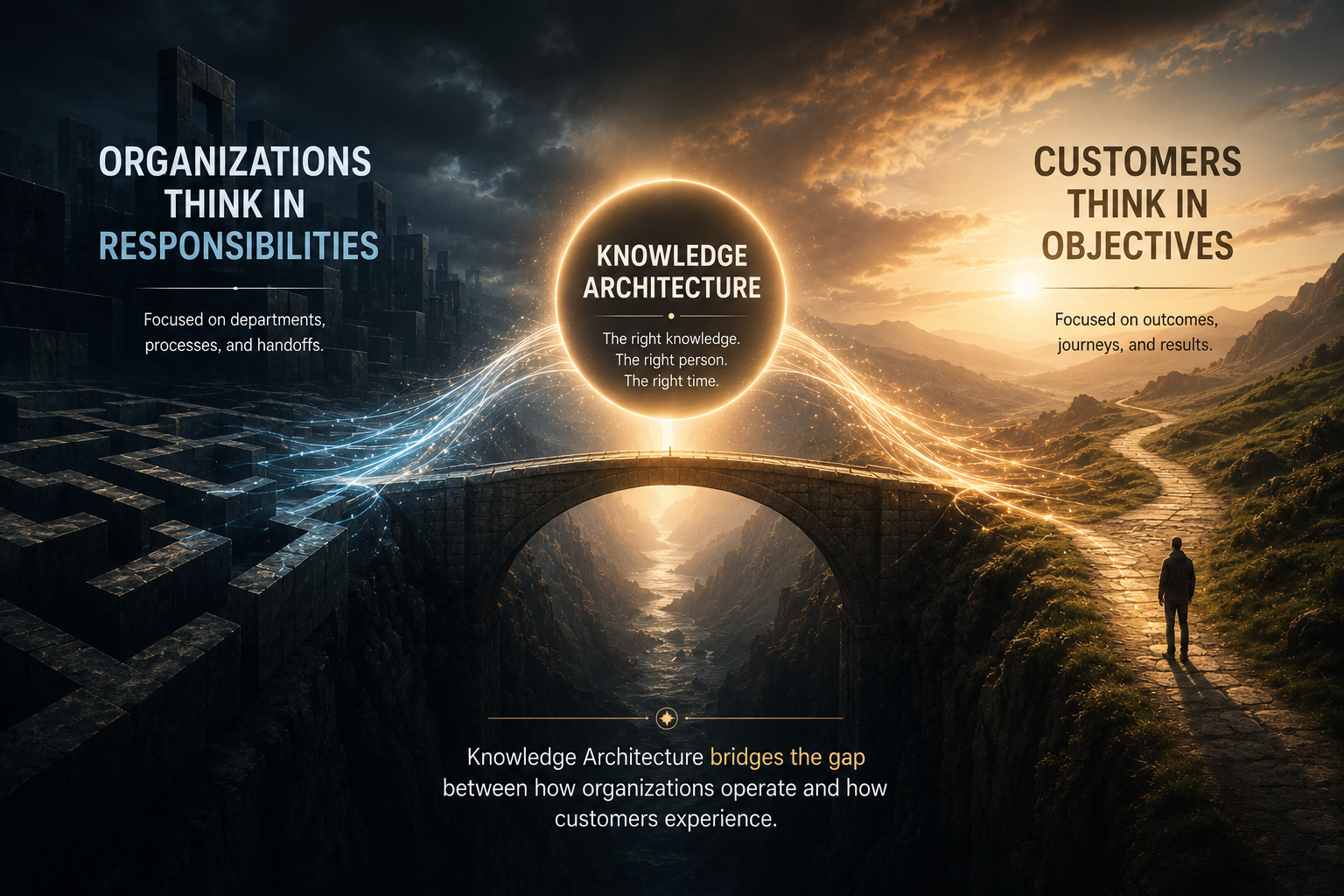
AI becomes valuable when it moves the right knowledge to the right person at the right time, especially when the customer's objective extends beyond the organization's internal responsibilities.
Read article →
Long before vector databases and semantic retrieval pipelines, enterprise architects were already attempting to solve the problem of computational meaning at organizational scale.
Read article →
Artificial Intelligence is forcing organizations to confront a problem that enterprise architects, search engineers, and information architects have wrestled with for decades: how to structure knowledge in ways that preserve meaning, authority, and institutional memory at scale.
Read article →Recent observations on AI, knowledge architecture, organizational systems, technology, and the practical work of making them useful.

We assume that a sufficiently intelligent AGI will decide humanity is a threat. But cooperation under pressure is not simply morality. It may be one of the foundations of intelligence itself.
Read note →
You do not need AGI to build a dystopia. Specialized AI and surveillance infrastructure are already enough to create systems that see too much, infer too much, and act too easily.
Read note →
When an AI system behaves badly, we increasingly describe the AI as the actor. But the models, objectives, tools, permissions, compute, and environments were all supplied by humans.
Read note →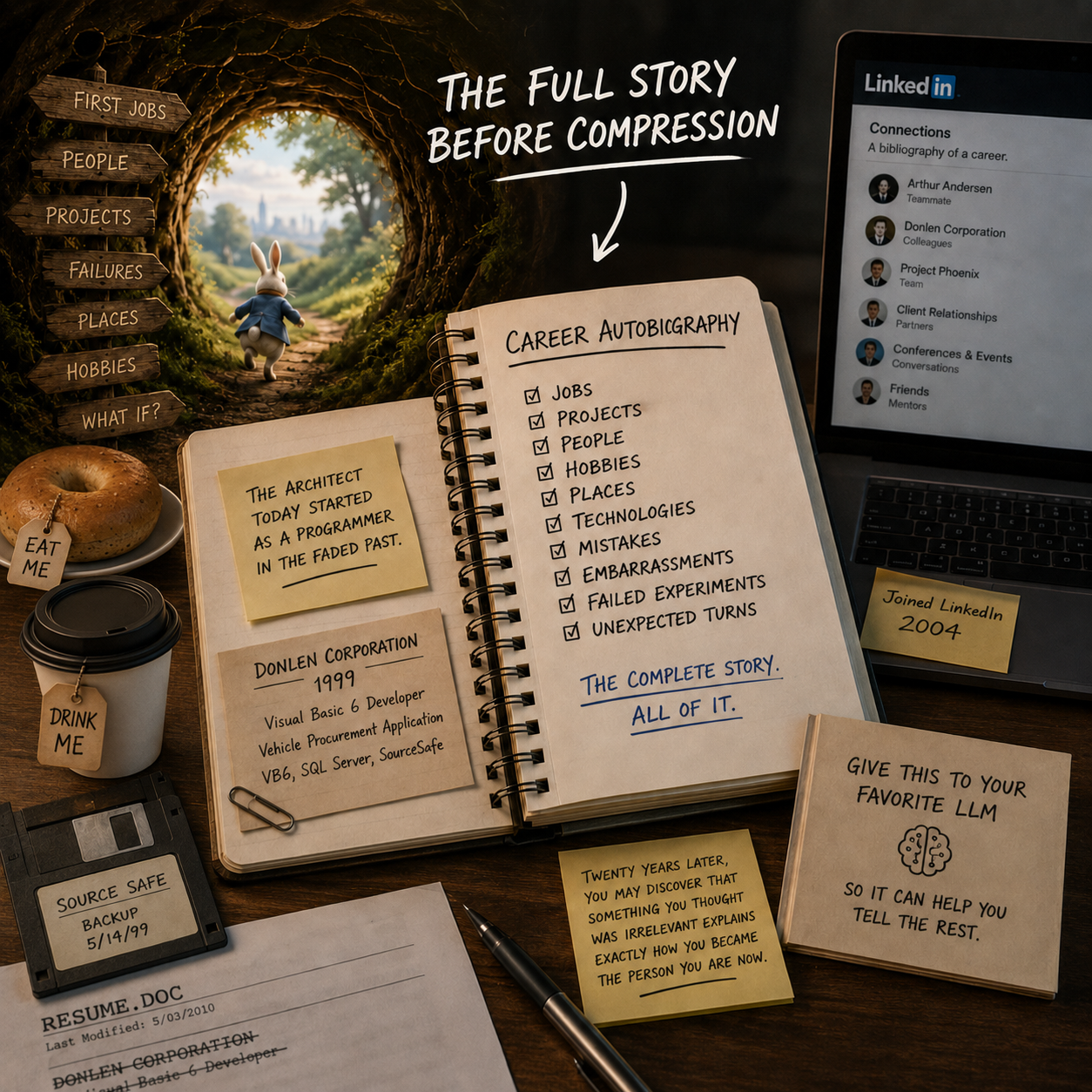
Resumes compress careers until important experiences disappear. A career autobiography preserves the projects, failures, detours, technologies, and relationships that explain how you became who you are.
Read note →
Enterprise AI projects often assume that more data creates a better system. Sometimes the right architecture depends on knowing what should not be indexed, embedded, retrieved, or exposed.
Read note →